Yes. Poor wheel alignment can accelerate uneven tire wear by changing how the tread contacts the road. When toe or camber angles move outside factory specifications, certain areas of the tire carry more stress than others, reducing tread life and increasing exposure to tire damage.
At Tire World, alignment inspections often reveal tire wear that has been developing long before a driver notices pulling, vibration, or steering changes. A tire can appear normal during a quick visual check while one section of the tread is already wearing faster and losing usable rubber.
Wheel alignment is more than keeping the steering wheel centered. Correct alignment helps maintain even tire contact with the road, slows uneven tread loss, and reduces the chance of replacing tires prematurely because of preventable wear.
Alignment Problems Accelerate Uneven Tire Wear
A tire is designed to spread road contact across the tread surface. When alignment angles shift, the tire can begin dragging across the pavement instead of moving smoothly through each rotation.
Common alignment-related wear signs include:
- Inner shoulder wear caused by excessive negative camber
- Feathered tread blocks caused by incorrect toe settings
- Uneven groove depth across the same tire
- Steering pull or an off-center steering wheel
- Increased road noise from irregular tread contact
When we inspect tires showing uneven wear at Tire World, the inner shoulder is one of the first areas we check because it often reveals alignment problems before the driver notices handling changes.
A small alignment change can create thousands of repeated scrub movements during normal driving. Over time, that constant friction removes tread material from specific areas instead of allowing the tire to wear evenly.
Salt Lake Roads Add Extra Alignment Stress
Driving conditions around Salt Lake City can place additional strain on steering and suspension components. Repeated impacts from rough pavement can gradually affect alignment angles, especially on vehicles that travel the same routes every day.
Local conditions that can contribute to alignment changes include:
- Frost heaves and pothole impacts around I-80 routes
- Daily commuter traffic through I-15 and I-215 corridors
- Industrial-area road debris near 4220 W 850 S
- Hot summer pavement that increases tire temperatures
A vehicle does not need a major accident to develop alignment issues. A worn suspension component, curb impact, or repeated road impact can change the relationship between the tire and pavement.
Tire Inspection Reveals Early Wear Damage
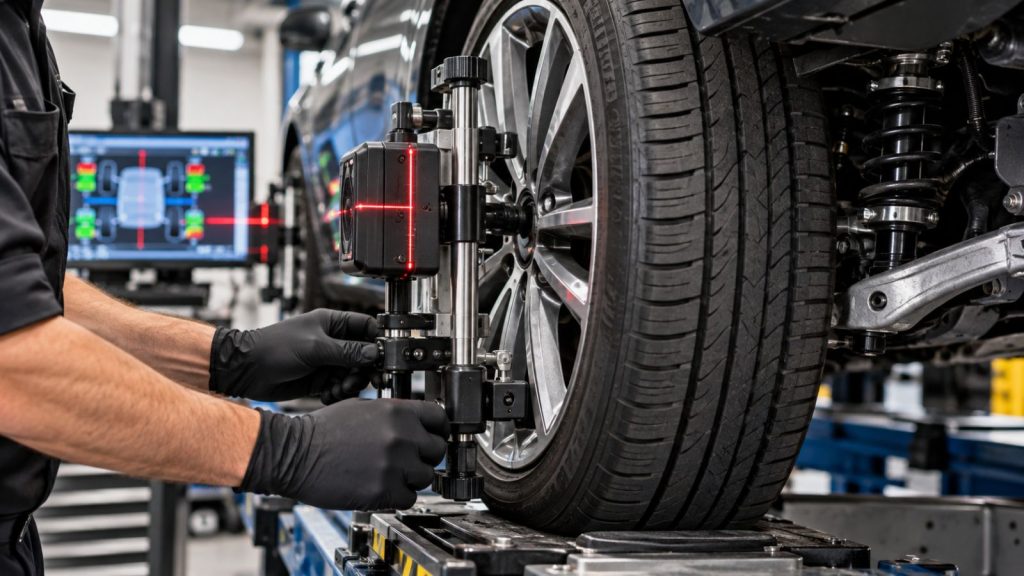
One commuter vehicle inspected at Tire World showed uneven inner shoulder wear while the remaining tread appeared acceptable during a quick visual check. Alignment measurements showed the suspension angles needed adjustment, and tread depth measurements confirmed that one side of the tire was wearing faster than the other.
The repair involved more than replacing worn tires. The alignment issue had to be corrected before installing new tires to prevent the same uneven wear from returning.
During an alignment and tire check, technicians review:
- Toe measurements that affect tire direction
- Camber angles that affect tread loading
- Tire depth across different tread areas
- Steering and suspension components connected to alignment changes
This process connects the tire condition with the mechanical cause behind the wear.
Uneven Wear Reduces Tire Protection
Tire damage does not always begin with a visible puncture or sudden loss of air. Uneven wear can remove protection from one section of the tire faster than the rest of the tread.
When a tire shoulder becomes significantly thinner, there is less rubber separating the road surface from the internal tire structure. Sharp debris, rough pavement, and repeated impacts have a greater chance of damaging an already weakened area.
Alignment-related wear can increase vulnerability by:
- Reducing available tread depth in specific areas
- Creating uneven heat across the tire surface
- Concentrating stress on smaller sections of rubber
- Shortening the usable life of the tire
Correcting alignment issues before severe wear develops helps preserve the tire structure and prevents avoidable replacement.
Heat Amplifies Existing Tire Wear
Salt Lake City summer temperatures can add stress to tires that already have uneven contact with the pavement. A tire that is scrubbing because of incorrect alignment can generate more heat in the worn area.
During inspections, technicians may compare tread temperatures and wear measurements to determine whether the tire is carrying pressure unevenly across the tread surface.
Heat does not create alignment problems, but it can speed up damage that begins with uneven tire contact.
Alignment Checks Protect Tire Investment
Replacing tires without correcting alignment issues can allow the same wear problem to return. New tires may start losing tread unevenly if the suspension angles continue placing extra stress on one section of the tread.
Regular alignment checks are useful when:
- Tires show uneven shoulder wear
- A vehicle pulls to one side
- Suspension parts have been replaced
- A vehicle experiences a strong pothole impact
- New tires are installed
An alignment check gives technicians a chance to correct the cause of uneven wear before it reduces the life of another set of tires.
Precision Wheel Alignment In Salt Lake City
At Tire World, technicians inspect tire wear, measure alignment angles, and adjust suspension settings to help vehicles maintain even tread contact with the road. The process focuses on identifying the mechanical issues that contribute to uneven wear before they lead to unnecessary tire replacement.
Visit Tire World at 4220 W 850 S, Salt Lake City for a wheel alignment inspection and tire wear evaluation. Protect your tires by correcting alignment issues before uneven wear turns into larger damage.
Frequently Asked Questions
Can wheel alignment cause uneven tire wear?
Yes. Incorrect toe or camber angles can place extra stress on specific areas of the tread, causing uneven wear on the inner shoulder, outer shoulder, or tread blocks.
Does wheel alignment help prevent tire damage?
Yes. Correct alignment keeps the tire contacting the road more evenly, which helps preserve tread depth and reduces stress on individual areas of the tire.
Should I check alignment when buying new tires?
Yes. Checking alignment before installing new tires can prevent uneven wear from affecting the replacement tires.
Can potholes affect wheel alignment?
Yes. Strong impacts from potholes, frost heaves, and road hazards can change suspension angles and contribute to uneven tire wear.
How can I tell if my tires are wearing unevenly?
Look for differences in tread depth across the tire, feathered edges, unusual road noise, vehicle pulling, or visible wear on only one side of the tread.
