Professional tire installation ensures vehicle safety and longevity through precision balancing, specialized mounting equipment, and expert torque application. In Salt Lake City’s varied climate, correct installation prevents premature tread wear, protects suspension components, and ensures reliable traction during rapid seasonal transitions and frequent mountain driving conditions.
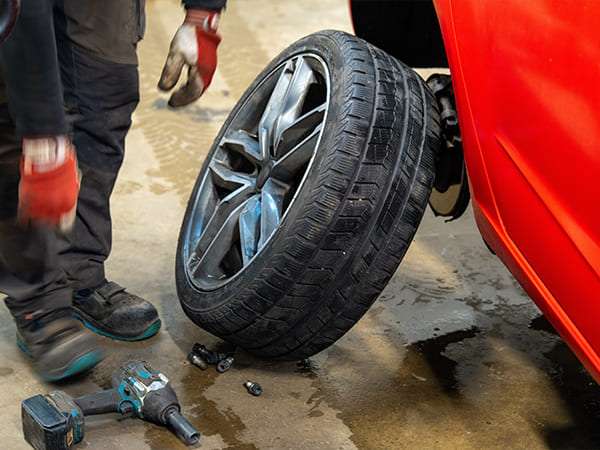
Why Professional Tire Installation Matters for Your Vehicle
Tires are the only point of contact between your vehicle and the road. While purchasing high-quality rubber is a vital first step, the performance of those tires is entirely dependent on how they are mounted and balanced. Proper installation is a technical process that requires specialized machinery and a deep understanding of mechanical tolerances.
In a professional setting, the goal is to create a seamless interface between the tire, the wheel, and the vehicle’s hub. When this is done correctly, it preserves the integrity of the tire’s structure and ensures the vehicle handles as the manufacturer intended.
The Technical Reality of Mounting and Balancing
A tire is not a perfectly uniform circle, nor is a metal wheel perfectly weighted. Professional installation addresses these microscopic imperfections through two critical phases:
Precision Mounting
Mounting involves seating the tire bead against the rim. Professionals use industrial tire changers that apply even pressure to prevent damage to the bead—the internal reinforced cable that holds the tire to the wheel. If the bead is nicked or stretched during a DIY attempt, it can lead to slow leaks or catastrophic “bead unseating” while driving.
Computerized Balancing
Even a tiny weight discrepancy can cause a tire to wobble. At highway speeds, this translates into a vibration that is felt through the steering wheel. Professionals use high-speed balancers to identify heavy spots and apply lead-free weights to counteract them. This process protects your wheel bearings and suspension from the constant hammering of an unbalanced assembly.
Common Failure Points in Improper Installation
We often see the results of “driveway” installations or cut-rate shops that skip essential steps. These failures are rarely immediate but manifest over a few hundred miles.
- Over-Torqued Lug Nuts: Many people assume “tighter is better.” However, using an impact wrench without a torque stick can stretch the wheel studs or warp the brake rotors.
- Improper Sealing: Failing to clean the “bead seat” on an old rim leads to corrosion-based leaks.
- Damaged TPMS Sensors: Modern vehicles have Tire Pressure Monitoring Systems (TPMS) inside the wheel. These are fragile and easily snapped if the mounting head is positioned incorrectly.
The Salt Lake City Factor: Climate and Terrain
In Utah, our tires face a broader range of stress than in many other regions. We deal with extreme temperature swings—sometimes 40 degrees in a single day—which causes significant fluctuations in tire pressure.
The Impact of Road Salt and Brine
Our winter road treatments are notoriously harsh on metal components. During a professional installation in Salt Lake City, a technician will typically clean the hub surface and the wheel’s interior mounting face. If a tire is mounted over existing corrosion or salt buildup, the wheel may not sit perfectly flush, leading to a subtle but dangerous vibration.
High-Altitude Performance
Driving through the Wasatch Range requires absolute confidence in your sidewall integrity and heat dissipation. A professionally balanced tire runs cooler and tracks straighter on steep descents, reducing the load on your braking system.
Symptoms of Poor Installation vs. Mechanical Issues
It is common for drivers to confuse installation errors with alignment or suspension problems. Here is how to distinguish them:
- Vibration at specific speeds (e.g., 55–70 mph): This is almost always a balancing issue.
- Vibration that increases with speed: This often indicates a tire that isn’t seated correctly on the hub.
- A “pull” to one side: While usually alignment-related, this can sometimes be caused by “radial pull” if tires were not inspected and rotated correctly during the initial mounting.
The Risks of Ignoring Installation Quality
If a tire is poorly installed, the most immediate consequence is financial: the tires will wear out prematurely. “Cupping” or “spotty wear” can ruin a new set of tires in less than 5,000 miles.
Beyond the cost, there is a safety risk. An incorrectly seated tire can lose pressure suddenly, and over-torqued studs can fail under the stress of mountain driving. Professional installation is essentially a form of insurance for the investment you’ve made in your tires.
Professional Evaluation
Ensuring your vehicle is equipped to handle Utah’s unique driving conditions starts with a technical assessment. If you are experiencing vibrations or are preparing for a new set of tires, Tire World can provide a professional evaluation of your current wheel assembly to ensure everything is meeting safety standards.
Professional tire installation is more than just putting rubber on a rim; it is a technical service that dictates how your vehicle interacts with the road. By prioritizing precision balancing, correct torque, and thorough hub cleaning, you protect your vehicle’s suspension and ensure your tires last as long as possible. In a climate as demanding as Salt Lake City’s, these small details make the difference between a reliable commute and an unnecessary mechanical failure.
Frequently Asked Questions
Is a vibration after new tire installation normal?
No. Any vibration felt through the steering wheel or seat after new tires are installed indicates an imbalance or an improper “bead seat.” The vehicle should be inspected to recalibrate the balance.
Do I need an alignment every time I get new tires?
While not strictly part of the installation, an alignment is highly recommended. New tires provide the perfect baseline to ensure your vehicle travels straight, which prevents the new rubber from wearing unevenly right out of the gate.
What is the risk of installing tires myself?
The primary risks are safety-related, including damaging the tire bead or the TPMS sensor. Without a commercial balancer, it is impossible to ensure the tire will run smoothly at highway speeds.
How long does a professional installation typically take?
A standard four-tire mount and balance usually takes between 45 and 60 minutes. This allows time for proper cleaning of the rims, precision balancing, and hand-torquing the lug nuts to factory specifications.
