Sidewall problems from potholes and curb impacts usually require tire replacement because the sidewall supports the vehicle during driving. Bulges, exposed cords, and repeated air loss are signs that the tire needs inspection.
A hard pothole hit or curb strike can affect a tire faster than many drivers realize. The outside rubber may only show a small mark, but the internal structure can be damaged after the impact.
Drivers around Salt Lake City’s industrial areas and major roads such as I-15 and I-80 regularly deal with freeze-thaw cycles, pavement cracks, and sharp road edges. These conditions create sudden impacts that can pinch the tire between the road surface and the wheel.
Low-profile tires are especially vulnerable because they have shorter sidewalls with less rubber to absorb impact. When the wheel pushes into a pothole edge, the sidewall can become compressed enough to damage the internal cords that keep the tire stable.
Common Signs of a Sidewall Problem
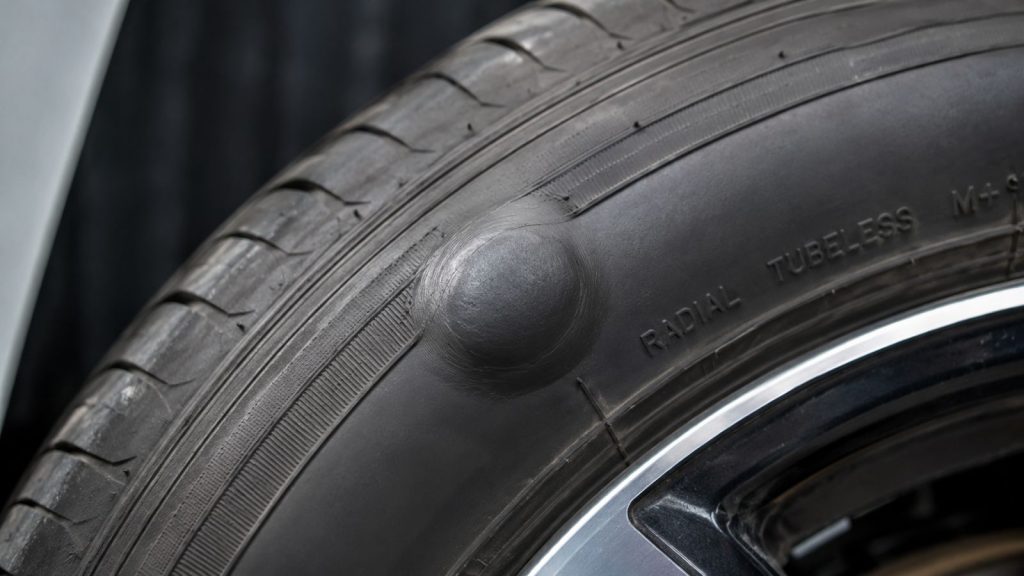
Sidewall damage does not always appear immediately after a road impact. Some tires continue holding air for a period of time before symptoms become noticeable.
Drivers should watch for:
- A bulge or bubble on the sidewall
- Sudden air pressure loss after hitting a pothole
- Cuts, cracks, or exposed cords
- Steering vibration after a curb impact
- A repeated need to add air to the same tire
A sidewall bulge is one of the most serious warning signs because it usually means the internal support structure has been damaged. The rubber surface may still look mostly normal while the inside of the tire has already been compromised.
How Road Impacts Damage Tire Sidewalls
The sidewall of a tire is designed to flex during normal driving. This flexibility helps absorb bumps and maintain a comfortable ride, but it also makes the area vulnerable during severe impacts.
During a pothole or curb strike, several things can happen:
- The wheel pushes the tire sidewall against the sharp edge of the road hazard
- Internal support cords can stretch or break from the sudden compression
- The inner liner may tear or weaken from the impact
- Air pressure can push into weakened areas and create a visible bulge
The tread area of a tire has stronger reinforcement because it handles contact with the road. The sidewall requires more flexibility, so damage in this area usually cannot be repaired safely.
Technician Inspection Process for Damaged Sidewalls
At Tire World, sidewall inspections start with a complete visual and physical check rather than replacing a tire based only on appearance.
The inspection process includes:
- Checking the outside sidewall for bubbles, cuts, or unusual shapes
- Inspecting the inside of the tire when impact damage is suspected
- Checking the wheel for bends or sharp edges caused by the impact
- Confirming whether the tire can safely remain in service
I regularly see tires come in after pothole strikes where the outside rubber looks acceptable, but the inner sidewall tells a different story. A closer inspection can reveal whether the tire structure has been affected and whether replacement is the safer option.
A common example is a driver who reports a slow leak after hitting a curb. The tire may not have a visible puncture, but the impact can damage the internal structure enough that continuing to drive creates a serious safety concern.
Why Sidewall Damage Usually Requires Tire Replacement
Sidewall repairs are not considered safe because this area constantly bends while the vehicle moves. A repair placed in the flexible sidewall section must handle repeated stress from steering, braking, and road impacts.
Tire replacement is recommended when there is:
- A visible bulge
- Exposed internal cords
- A cut that reaches the tire structure
- Signs of internal separation
- Damage after driving on a severely underinflated tire
A tire replacement is often the only reliable option once the sidewall structure has been affected.
Protecting Tires on Salt Lake City Roads
Drivers cannot avoid every pothole or road hazard, but a few habits can reduce the chance of serious tire damage.
Helpful steps include:
- Keeping tires inflated to the manufacturer recommendation
- Checking tire pressure during seasonal temperature changes
- Inspecting tires after a strong pothole or curb impact
- Avoiding continued driving when a bulge or vibration appears
Cold temperatures can reduce tire pressure, while warmer spring weather can expose damage caused during winter driving. Regular inspections help identify problems before they become dangerous.
Professional Tire Inspection at Tire World
A damaged sidewall should not be ignored, especially before highway driving on roads such as I-15 or I-80. A tire that appears usable from the outside may still require replacement after a strong impact.
Tire World provides tire inspections, impact assessments, wheel checks, and replacement recommendations based on tire condition. Our team serves local drivers from our location at 4220 W 850 S, Salt Lake City, UT 84104.
Schedule a tire inspection with Tire World before a small sidewall concern becomes a larger safety issue.
Frequently Asked Questions
Can a tire with a sidewall bulge be repaired?
No. A sidewall bulge usually indicates internal tire damage, and the tire should be replaced instead of repaired.
Can a tire plug fix sidewall damage?
No. Tire plugs are designed for certain tread-area punctures and are not a safe repair option for sidewall damage.
Is it safe to drive with exposed tire cords?
No. Exposed cords mean the tire structure has been compromised and the tire should be inspected and replaced if necessary.
Why do potholes damage low-profile tires more easily?
Low-profile tires have shorter sidewalls, which provide less cushioning during sharp impacts between the wheel and road surface.
Should I replace a tire after hitting a curb?
Yes. A strong curb impact can damage the tire or wheel even if there is no immediate air loss, so an inspection is recommended.
