Salt Lake City drivers can prevent early tire replacement by checking pressure, spotting slow leaks, and correcting uneven wear before damage increases. Tire World helps identify tire concerns caused by Utah weather changes, road conditions, and daily commuting. Regular inspections protect tire life, improve reliability, and help drivers avoid replacements.
Protecting Your Tires Through Utah Driving Conditions
Salt Lake City drivers deal with changing weather, busy highways, and road conditions that can slowly wear down tires. Cold temperatures can reduce tire pressure, winter road treatments can affect valve components, and hot summer pavement can add stress to tires that are already losing air.
At Tire World, I regularly inspect tires that still have plenty of tread left but need tire replacement because of issues that developed over time. A slow leak, uneven wear, or neglected pressure problem can damage a tire long before most drivers expect it.
Daily routes around I-15, I-80, and the industrial areas near 4220 W can put thousands of miles on commuter vehicles. Keeping tires properly inflated and checking wear patterns regularly helps drivers avoid replacing tires earlier than necessary.
Common Reasons Tires Wear Out Too Soon
Many drivers replace tires only after noticing worn tread. In the shop, I often see another issue: tires that still have tread but have developed problems from months of driving with incorrect pressure or uneven contact with the road.
Common causes of early tire replacement include:
- Slow leaks from valve stems or wheel sealing areas
- Low tire pressure caused by weather changes
- Uneven wear caused by alignment issues
- Damage from road debris or impacts
- Ignoring vibrations, pulling, or unusual tire noise
A tire can appear fine during a quick walk-around but show signs of trouble during a proper tire inspection. Checking pressure, measuring tread wear, and looking closely at the valve area can reveal problems before they become expensive repairs.
What We Check During a Tire Inspection
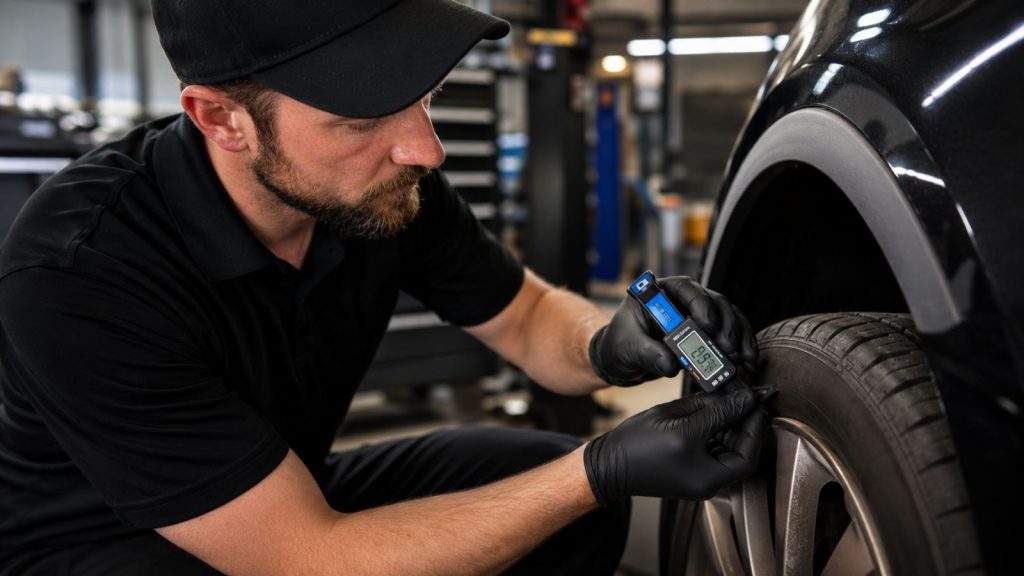
A good tire inspection involves more than checking whether the tread looks worn. I look for signs that explain why a tire is wearing unevenly or losing air.
During an inspection, our technicians check:
- Tire pressure compared with the vehicle recommendation
- Valve stems and wheel areas for signs of leaks
- Tread wear across different parts of the tire
- Uneven wear such as shoulder wear, cupping, or feathering
- Signs of damage after regular highway driving
One issue we see often is a slow leak that develops gradually. Drivers may only notice the problem when a tire warning light appears or the vehicle begins to pull slightly. Catching the problem earlier can help protect the tire and prevent additional wear.
A Tire Problem We Found During a Local Inspection
A commuter vehicle recently came into our shop because the driver noticed vibration during highway driving. The tires still had visible tread, so replacement was not the first assumption.
During the inspection, I found uneven wear on one tire and lower air pressure than recommended. The leak was traced to a damaged valve area, allowing air to escape slowly over time. Because the issue had been developing gradually, the tire had started wearing differently from the others.
After correcting the leak and checking the wear pattern, we explained the condition of the tire and recommended the next steps based on what we found. This type of inspection helps drivers make decisions based on the actual condition of their tires instead of replacing them too early.
Simple Tire Care Tips for Salt Lake City Drivers
Regular checks are important because many tire problems develop slowly without obvious warning signs.
Helpful maintenance steps include:
- Check tire pressure once a month
- Check pressure after major temperature changes
- Inspect tires before longer highway trips
- Rotate tires based on the vehicle manufacturer schedule
- Have unusual vibration, pulling, or uneven wear inspected early
Drivers who commute regularly through Salt Lake City roads can extend tire life by addressing small issues before they become larger problems. Regular tire checks help drivers catch small problems before they turn into unexpected replacements.
Tire Inspection Services at Tire World
At Tire World, we inspect tires for slow leaks, uneven wear, pressure concerns, and other issues that can shorten tire life. Our technicians use practical inspection methods to help drivers understand what is happening with their tires and what repairs or maintenance may be needed.
Visit Tire World at 4220 W 850 S, Salt Lake City, UT for a complete tire inspection. We can check your tire pressure, inspect wear patterns, and help identify problems affecting your tires before they lead to unnecessary replacement. Schedule your tire inspection with Tire World and keep your vehicle ready for Utah driving conditions.
Frequently Asked Questions
Can low tire pressure damage tires over time?
Yes. Driving with low tire pressure can increase wear and create extra stress on the tire. Regular pressure checks help keep tires wearing evenly and reduce the chance of premature replacement.
Can winter road salt affect tire components?
Yes. Winter road treatments can contribute to corrosion around metal valve components and wheel areas, which may lead to slow air loss.
How often should Salt Lake City drivers check tire pressure?
Drivers should check tire pressure at least once a month and after major weather changes. Temperature swings can affect tire pressure and change how a tire wears on the road.
Can uneven tire wear mean there is another vehicle problem?
Yes. Uneven wear can point to alignment concerns, suspension issues, or incorrect tire pressure. A professional inspection can help determine the reason behind the wear.
Can a tire need replacement even if it still has tread?
Yes. A tire may need replacement if it has serious wear issues, damage, or problems that affect its condition. Tread depth alone does not always show the full condition of a tire.
